Last week, officials representing the GCC states formed a panel hosted by the World Economic Forum to understand the economic outlook for the Gulf in 2024. Here’s what you should know about the GCC from formation to today.
Emergence of the GCC
Founded in 1981, the Gulf Cooperation Council (GCC; Arabic: مجلس التعاون الخليجي) is a union of governments across member states: Bahrain, Kuwait, Oman, Qatar, Saudi Arabia, and the United Arab Emirates. The GCC is a rooted political and economic alliance
The leading objectives of the GCC include to:
- “Effect coordination, integration and interconnection” of member states;
- Align regulations across various arenas such as commerce, healthcare, education and legislation;
- Promote the scientific and technological advancements.
**An estimated 45% of the world’s oil reserves originate from the GCC. **
The proceeds from oil reserves have allowed the bloc to develop infrastructure and invest in non-oil economies to enable diversification. The emergence of new sectors attracts a steady influx of expat workers which heightens population growth. With this transformation, the GCC is at the heart of the economic development for MENA.
The GCC growth
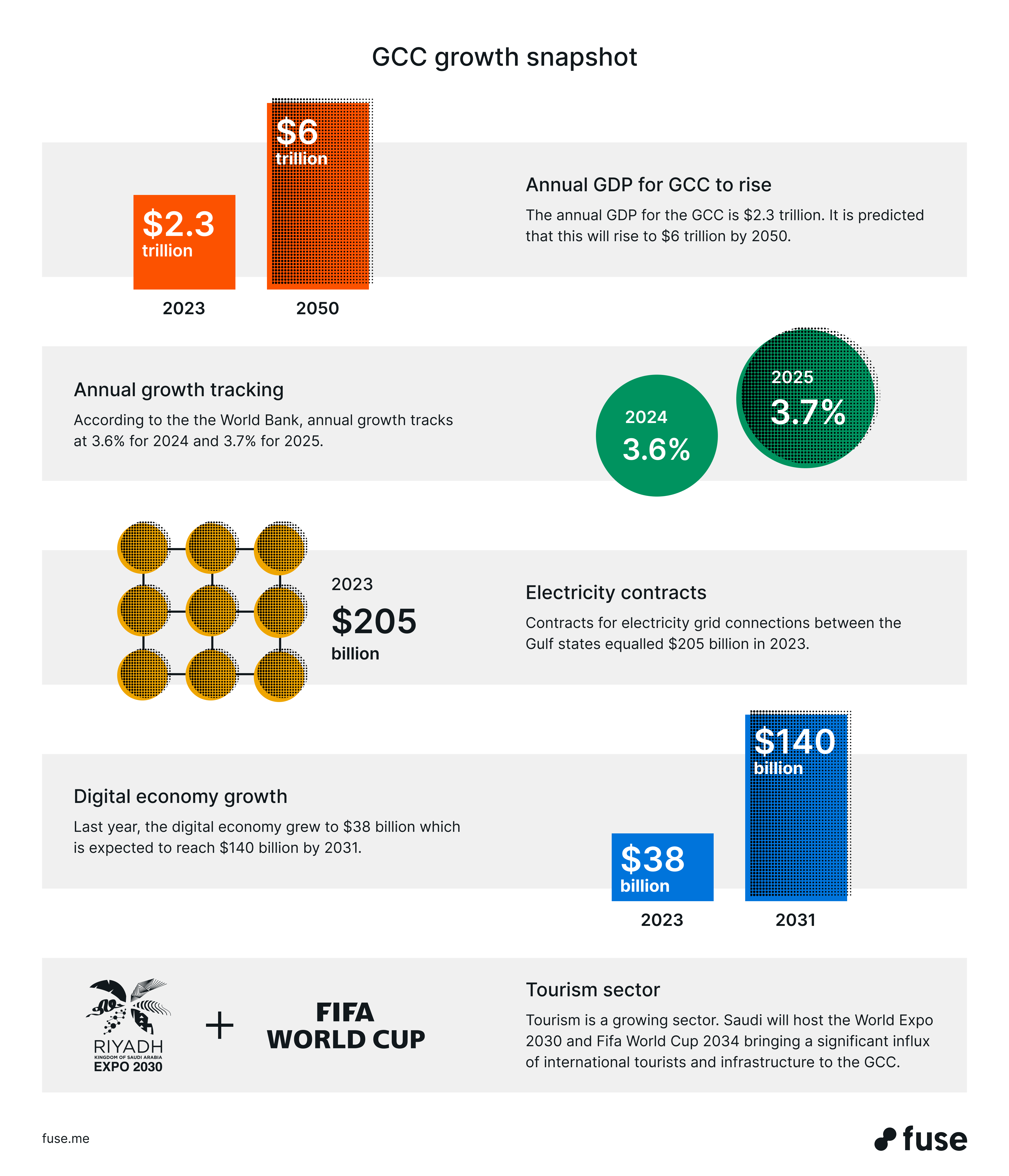
To highlight the collective economic strength of the bloc, here is a snapshot of the current outlook:
Davos, Switzerland
Experts across the bloc sat down on Tuesday, 16 January, to discuss the Gulf economies.
Here’s what you should know about the leading conversations surrounding the Gulf states at Davos last week:
Key takeaways:
- The UAE Economy Minister, Abdulla bin Touq Al-Marri, addressed the competition amongst the various states as beneficial given the steady growth across all economies. Simply put, competition drives innovation which leads to growth and job creation.
- Growth sparks far-reaching synergies.
- The emergence of non-oil sectors has attracted top talent in the global expat community to “build a life” in major cities across the Gulf.
- Youth empowerment at government level has helped transform how countries such as the UAE, Saudi and Qatar operate.
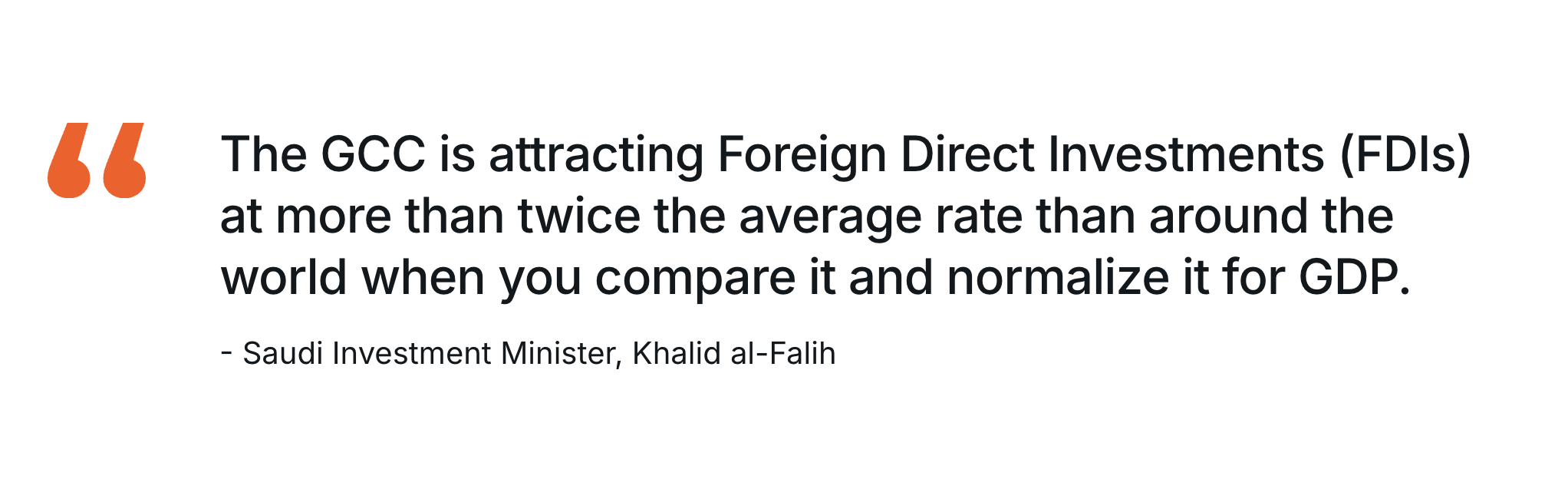
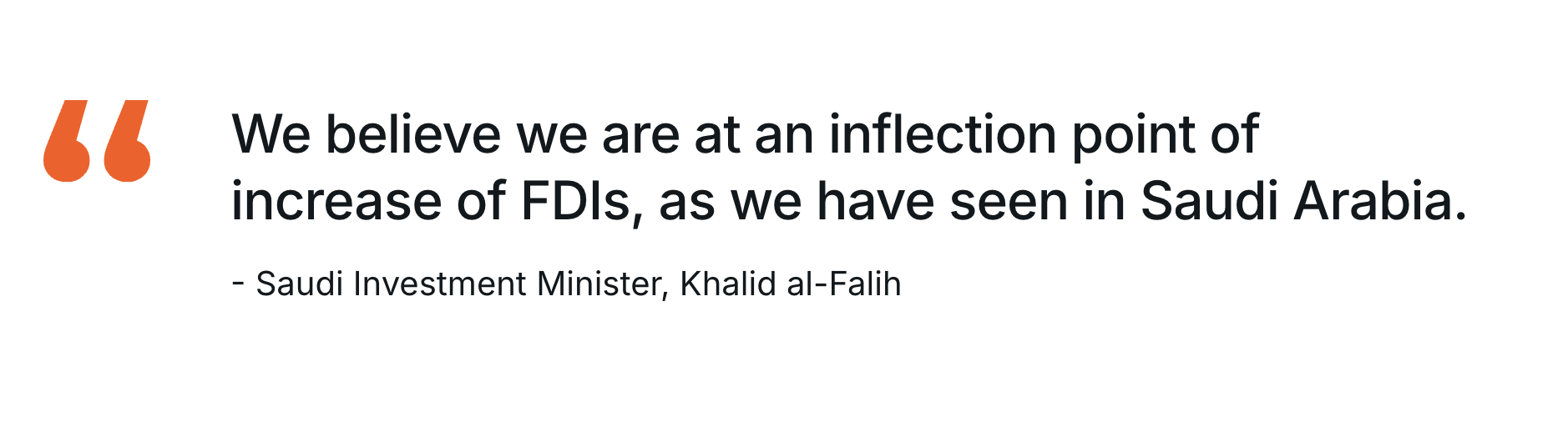
- The GCC is attracting FDI at rates which far exceed global standards.
- There is a key focus on private-public partnerships to encourage entrepreneurship and economic development.
- Across industries, there is a push to invest in technological advancements, particularly AI.
- Sustainable growth in the region is predicted based on the FDIs inflows and emergence of non-oil economies with tourism and renewables being key drivers.
At Fuse, we’re keeping our finger on the pulse of the GCC. It’s predicted the Gulf states will drive regional growth for MENA in 2024.
Get in touch with our team if you’d like to unlock payments across the region.


.png)