
The rise of expats in the Middle East
In recent years, the Middle East has become a thriving hub for expats seeking new opportunities and experiences. The region's dynamic job market, low income tax, and cultural diversity attract a significant number of expats from around the globe.
The Middle East has emerged as a magnet for skilled professionals, entrepreneurs, and workers across various industries.
Countries like the United Arab Emirates (UAE), Qatar, and Saudi Arabia have an uptick in expatriate populations, creating cosmopolitan commercial hubs and contributing to the region's economic growth.
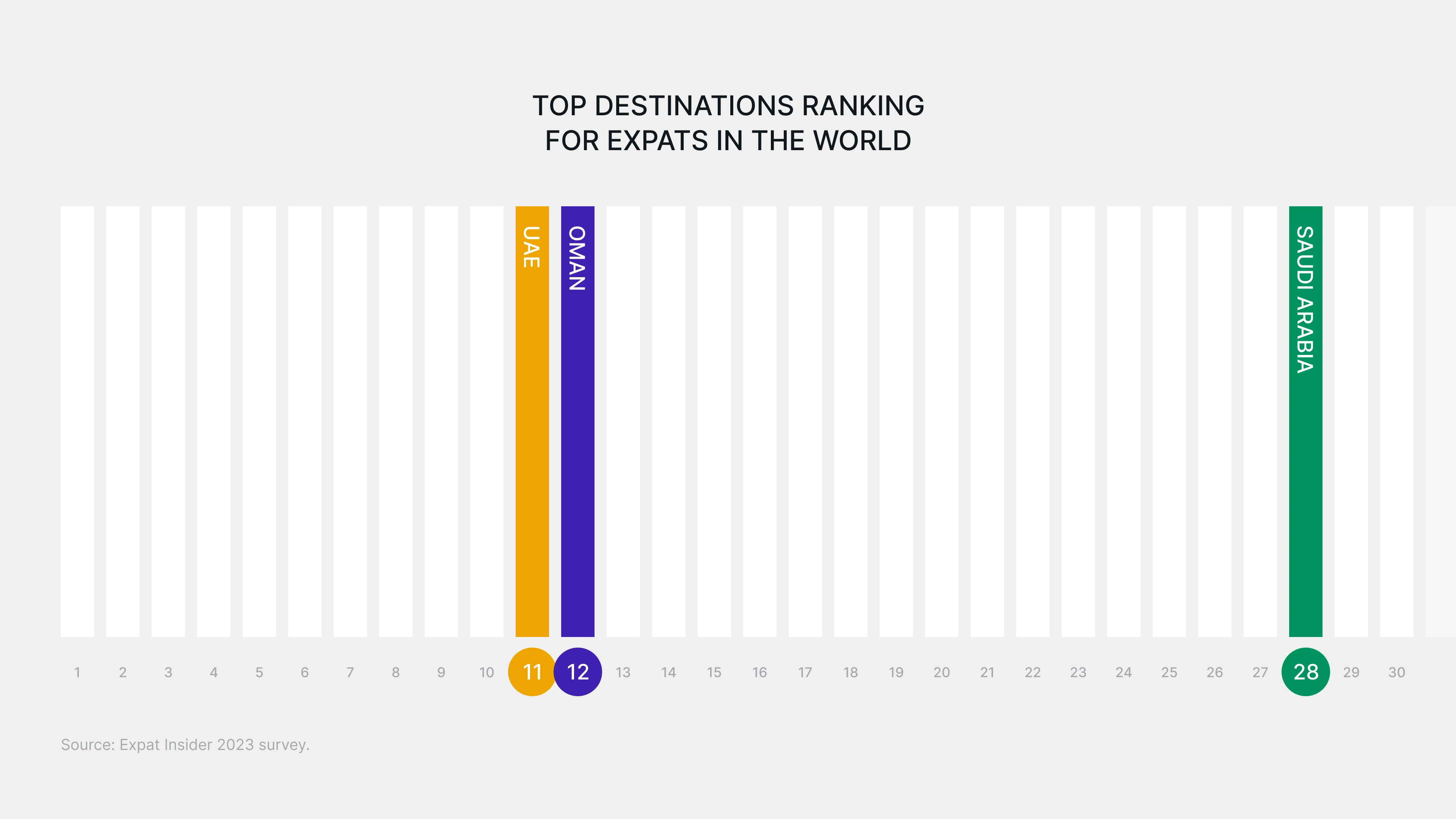
It's common for expats to transfer funds generated abroad back to their home countries, often providing financial support for families. In the case of the Middle East, there are significant remittance corridors with countries across Asia, Africa and the West.
About 40% of the population in the Middle East are expats. This means there is growing demand for cross-border payments. Recently, we touched on the gig economy and how it's shifting demand for payments. We envision a cohort of expat workers entering into the local gig economy, compounding the shift in the payments landscape.
Cross-border Payments

These transactions fuel globalisation and connect world economies.

Traditionally, cross border payments are not efficient or user-friendly.
- Expensive: Transaction fees and SWIFT fees can be expensive. On top of this, the spread on the foreign exchange may be high. It's especially pricey for low value transactions.
- Slow: Because many partners are involved, it slows down the transaction time to a few days in certain emerging markets.
- Inaccessible: Certain global communities remain underbanked. This makes money transfers challenging for customers without access to traditional banking.
Financial resilience was a prominent theme during this year's World Economic Forum, which we discussed last month in our post on the GCC economies. An S&P study indicated that 66% of the global population are not financially literate. To address these challenges, many governments are launching financial literacy programs to support local communities. For example, Saudi's Ministry of Education launched a mandatory course, "Financial Knowledge" last year and the Authority of Social Contribution in Abu Dhabi offers the "Ghaya" to locals. It is a slow shift towards financial inclusion. Yet, these educational programs and access to better payment solutions act as a bridge towards greater inclusion.

Looking forward
MENA's focus on attracting expats to the region is not slowing down. In fact, Dubai's Urban Plan looks to double the population by 2040 and the revolutionary Saudi construction, The Line aims to draw 9 million people to the city. These major developments along with digital transformation equals a host of opportunities for modernised payments in the region.


.jpeg)